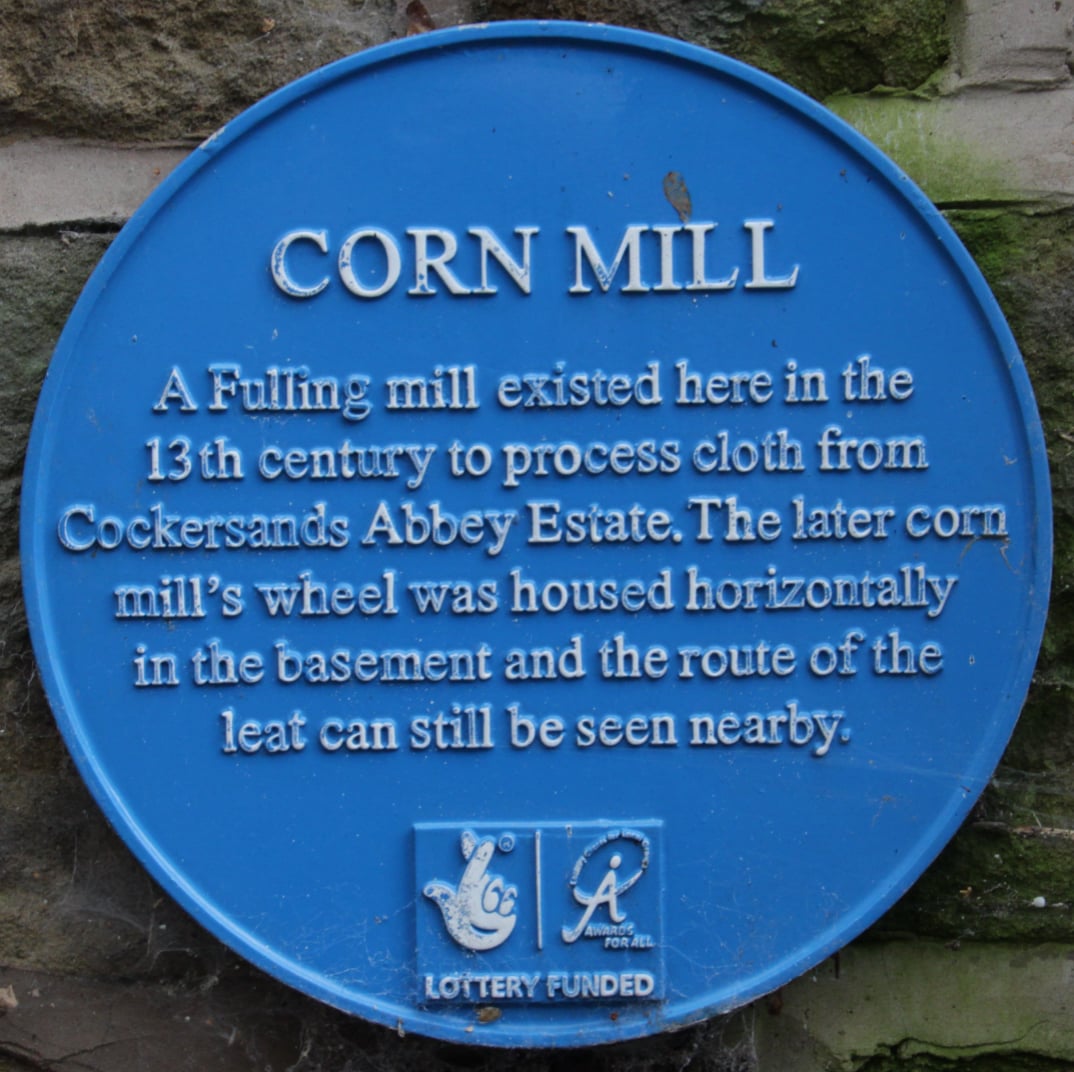
A fulling mill existed here in the 13th century and processed cloth from Cockersand Abbey estate. The Abbey housed Premonstratensian monks (also known as White Canons) who relied heavily on sheep farming for economic survival. They would use the sheep to provide meat, milk and wool.
Wool from the Abbey would have been sent for fulling, a process that increases the thickness and compactness of woven or knitted wool by subjecting it to moisture, heat, friction, and pressure to shrink the wool and produce a smooth, tightly finished wool fabric that was light, warm, and relatively weather proof. The fabric could then be used to make the monks’ robes and other items for use in the monastery.
The monastery was closed in 1539 during Henry VIII dissolution of monasteries.
Sometime later the mill became a corn mill and operated as such for over 300 years. Unusually the mill wheel was housed in a tunnel under the building rather than on the outside as was common.
The Corn Mill is now a nursing home, and many of the original mill features have been retained.